Originally published in Wine Business Magazine
The Australian wine industry is a far cry from the old ‘boys club’ it used to be. High profile Women in Wine Awards, media showcasing female winemakers and quotas at wine shows are now commonplace.
But has the industry truly achieved gender equality?
The reality is, 90% of winemaking leadership positions are still held by men. This is largely due to a culture that prevents women from succeeding in both work and motherhood.
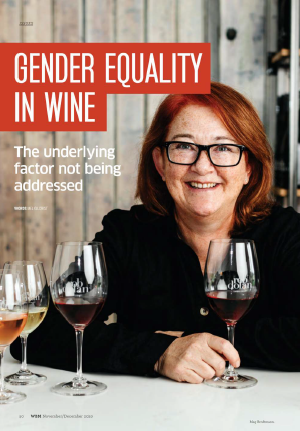
Meg Brodtmann, a Master of Wine with decades of winemaking experience, recently joined Rob Dolan Wines in the Yarra Valley. Brodtmann is passionate about women in the industry, as a founding member of Yarra Valley Wine Women – a collaboration with the goal to support the success of women in the industry.
While Brodtmann supports current initiatives towards this goal, she says more needs to be done.
Brodtmann experienced casual sexism early in her career. She would be sent to do physically demanding tasks because “it’ll make a man of you” and was subjected to locker-room type behaviour like men exposing their genitals.

“It had to be water off a duck’s back” she says. “It forced me to become quite tough, and I had to work harder than anyone else to prove myself.”
“It’s great to stand around and clap ourselves,” she says. “But unless we as an industry make systemic change it’s not going to get any easier.”
Despite this, Brodtmann doesn’t feel she was disadvantaged for being a woman – until she started having children.
“When you start procreating is when men take over,” she says.
Twelve to eighteen-hour days are common across the Australian wine industry during vintage, as are weeks at a time with no days off. Yet, many seem to thrive off this, wearing their lack of sleep like a badge of honour and gloating about hours worked.
Being unable to participate in this demanding work as expecting or new mothers is what seems to stall career progression for women in wineries.
Brodtmann tells me she has seen many instances of this. Female winemakers have children and are viewed differently by management upon return. Sadly, many never manage to get their career back on track.
“A valued winemaker who happens to have a baby shouldn’t be castigated and lose her ability to go forward in that business.”
Brodtmann says this used to be the case in all sectors of the industry, although she has seen significant change for women in sales and marketing functions.
Emma Baldwin’s impressive career in wine backs this up. Baldwin is now Head of Global Wine Delivery at Pernod Ricard, a multi-national drinks corporation. On the way to this high-powered position, she tells me she was “terrified” of falling behind when she had her child, but management was very supportive.
“We worked out a maternity leave plan so I wouldn’t feel that I was missing out on career progression,” says Baldwin.
“Both my managers have been fathers to young children and they are very open with the fact that, come 5pm, they will be leaving the office to have dinner with their families.
“It’s great to visibly see two male senior directors leading by example.”
Brodtmann believes the cycle for winemakers won’t be broken until more women are in similar positions of leadership to inspire the flexibility and mindset needed for change.
“It’s not going to change until women get there, and women can’t get there because it hasn’t changed” she explains.
I questioned winemakers on an international forum about whether flexibility and reduced hours is possible. I was laughed at and was told that “nature waits for no one!”
I thanked them for their perspective. In turn, they assured me that it wasn’t a perspective, it’s just the way things are.
One senior Australian winemaker was open to the possibility of change but pointed out a major barrier is the seasonality of the work.
“It can be hard to find good talent for a three-month period as well as strong leaders to manage multiple shifts” he told me.
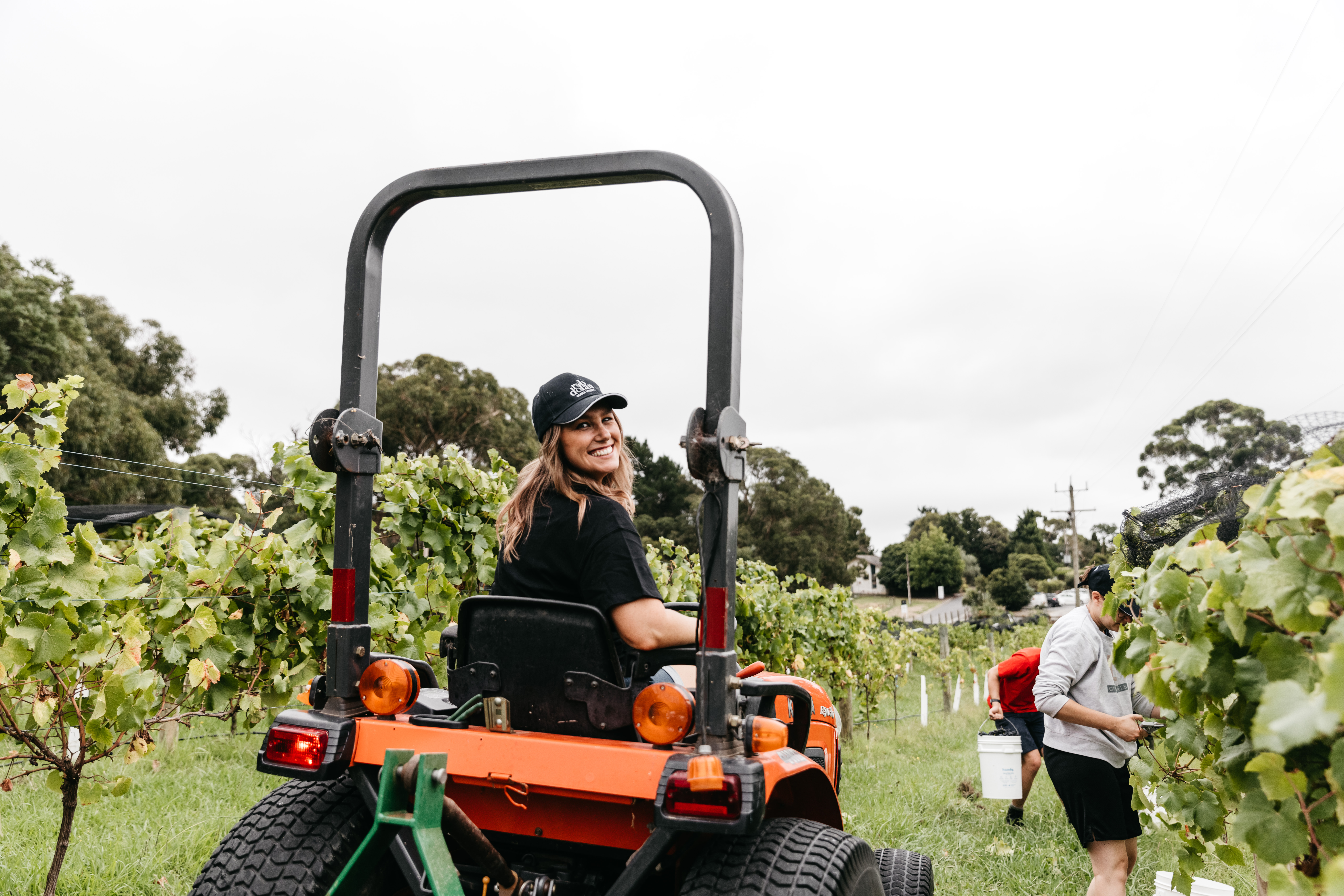
The exception seems to lie with corporate wineries, who have the resources and mindset to offer the necessary support for women in this stage of their lives. Allira Lord is one such woman, who was making wine for Jacob’s Creek in the Barossa when she fell pregnant.
“What do we do now?” she asked her manager nervously. “I don’t know,” he said, “we’ve never had a winemaker become pregnant before. But we’re going to figure it out.”
Her work week became four days, and tastings became optional, as did hot days out in the vineyards.
During Lord’s maternity leave, a plan was put in place to extend optional invites to Lord for meetings, decision making and tastings, and she says she hasn’t felt disadvantaged as a winemaker for taking this time.
“I know I am more fortunate than many other female winemakers in this position,” says Lord. “But I don’t want to say I’m lucky because this should be the standard. Women are the only ones who can have a baby so every woman should be as supported as possible, no matter the size of her workplace.”
The resource and support larger wineries can offer does seem to make them an exception to the rule. One winemaker stated they “don’t have the luxury” of equipment and staffing to make this possible, and therefore only have vintage staff who can handle all the hours.
While many agree and view this as just the way things are, Canberra winemaker Emma Shaw is one person refuting the argument that smaller wineries are “different” to other industries and therefore don’t need to change.
“That argument just doesn’t cut it anymore,” says Shaw. “Every industry is different and has challenges and established cultures which make change difficult. But change has happened in even the most unlikely of industries” she says.
Wage and leadership gaps are improving in Australian mining and manufacturing; there are also improvements in broader agriculture.
Like Brodtmann, Shaw believes the answer lies in the hands of employers and managers.
“I firmly believe it is managers that need to change. Women who are seeking flexibility are willing to go out of their way to make it work.”
The best argument presented by the wine industry for fewer people working more is lack of talent, yet Shaw points out “if the wine industry and wineries don’t adapt, they are missing out on 50% of their talent pool.”
The solution is quite literally in the problem.
The wine industry distanced itself from its ‘boys club’ image by giving visibility to female winemakers through awards and promotion. But perhaps this is only addressing the surface of the problem.
The industry could make efforts to dig deeper and challenge change core beliefs and practices in the system. Perhaps then, we’d see tangible improvements in gender equality.
And just perhaps, if the industry grew the talent pool by opening opportunity for women, vintage as we know it would be a better experience for every winemaker involved.
 Shiraz & Shenanigans